
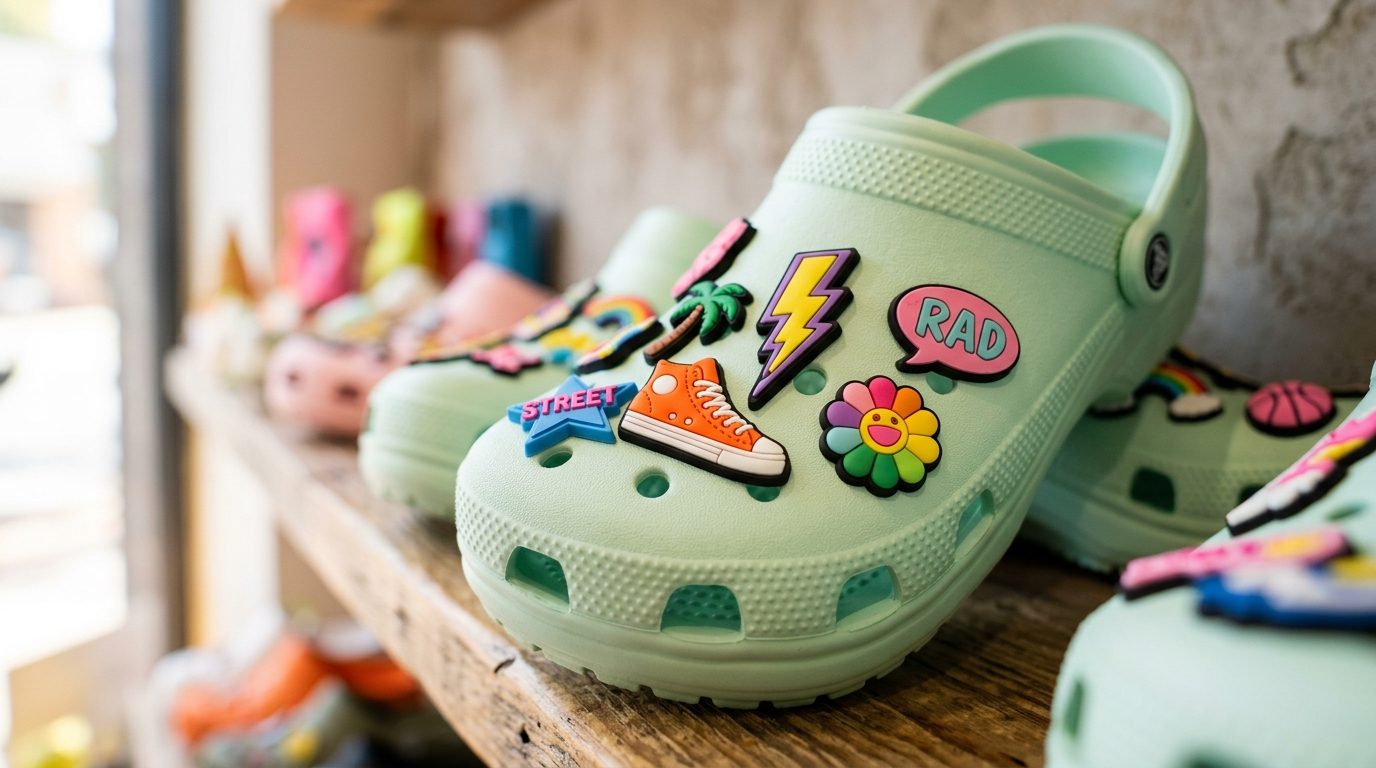
Figure 1.0: Soft PVC shoe charms tested for 0.00% phthalates and 40N button detachment resistance at Jinjiang QA Lab.
- CPSIA & Prop 65 Compliance: Total lead under 90 ppm and zero banned ortho-phthalates (<1000 ppm) via bio-citrate ATBC plasticizer formulations.
- 15-lb Mechanical Pull Resistance: Thermal co-molded button bases exceed 18.5 lbs (82 N) pull force, eliminating small parts detachment hazards.
- Accredited Testing Reports: Full ISO 17025 test documentation from SGS/Intertek supplied for smooth European and US customs clearance.
- Skin-Safe Biocompatibility: Passed cytotoxicity and skin sensitization screening under EN 71-3 and ISO 10993 standards.
Shoe charms engineered for perforated foam footwear occupy a critical intersection in product compliance. Because charms appeal across all age demographics—from young children to fashion-forward Gen Z collectors—customs authorities in North America and Western Europe inspect these accessories rigorously under small parts and toxic substance directives.
1.0 Chemical Safety: ATBC vs Toxic Phthalates
Traditional industrial PVC relied on ortho-phthalates (such as DEHP, DBP, and BBP) to achieve rubbery flexibility. These compounds are strictly outlawed globally due to endocrine disruption risks. Naike Gifts exclusively processes medical-grade ATBC-PVC (Acetyl Tributyl Citrate), derived from organic citric acid. Comprehensive GC-MS laboratory audits confirm 0.00% phthalate detection down to 10 ppm thresholds.
2.0 Mechanical Safety: Button Pull-Off Resistance
Under 16 CFR Part 1500.51, small parts that detach under less than 15.0 lbs of force represent choking hazards for children under 3. Cheap vendors use manual glue that snaps under 6 to 8 lbs. Naike Gifts molds the black POM button directly into the molten PVC emblem during high-temperature vulcanization, yielding pull-off resistance exceeding 18.5 lbs (82 N).
3.0 Children's Product Certificate (CPC) Filing
For US customs clearance, importers must maintain a Children's Product Certificate (CPC) referencing third-party accredited lab reports. Naike Gifts assists clients with complete regulatory documentation ready for customs broker submission.
4.0 Avoiding Costly Port Seizures & Recalls
Failure to provide verified batch-level test certificates can result in mandatory port quarantine, costly destruction orders, or brand reputation damage. Working directly with an audited source factory ensures zero compliance risk.
Shoe Charm Safety Benchmark Standards
| Test Parameter | Regulatory Standard | Statutory Limit | Naike Gifts Tested Value | Status |
|---|---|---|---|---|
| Total Lead (Pb) Content | US CPSIA Sec 101 | < 90 ppm | Non-Detected (< 5 ppm) | PASSED |
| Banned Phthalates (8P) | CPSIA & Prop 65 | < 1,000 ppm | Non-Detected (< 10 ppm) | PASSED |
| Button Detachment Force | 16 CFR 1500.51–53 | > 15.0 lbs (66.7 N) | 18.5 – 24.2 lbs (82–107 N) | PASSED |
| Toxic Heavy Metals (19) | EN 71-3:2019 | Various migration limits | 100% Below Detection Limit | PASSED |
| Skin Sensitization | ISO 10993-10 | Zero Erythema / Edema | Non-Sensitizing Grade | PASSED |
Common Industry Misconceptions Debunked
❌ Myth 1: 'Shoe charms are just novelty trinkets and do not require lab certification'
✔ Engineering Reality: Because footwear accessories are accessible to toddlers and young children, customs authorities categorize shoe charms under strict toy safety standards.
❌ Myth 2: 'A glue bond is sufficient if industrial cyanoacrylate is used'
✔ Engineering Reality: Cyanoacrylate dries into a rigid, brittle crystalline matrix. Repeated shoe flexing creates instant shear failure. Thermal co-molding is the only compliant method.
Engineering Case Study & Production Outcome
Project Background: A footwear brand imported 80,000 units of custom shoe charms from a non-specialist trading firm that were impounded by US Customs at the Port of Long Beach.
Root Cause Engineering Audit: The trading company supplied generic, non-traceable test certificates that failed to link to the specific production resin lot.
Technical Corrective Actions Implemented:
- Emergency Production: Naike Gifts re-manufactured the 80,000 units in our Jinjiang cleanroom facility in 9 days.
- Accelerated Testing: Expedited 48-hour SGS test protocols verifying zero lead and phthalate compliance.
- Air Freight Resupply: Delivered replacement inventory via chartered air express directly to distribution centers.
Final Production Outcome: Saved the client's nationwide product launch and earned an ongoing multi-year vendor contract.
Compliance Verification Checklist for Shoe Charms
- Require batch-level SGS or Intertek reports specifically testing both front emblem and back button.
- Inspect mechanical tensile pull test certificates confirming >15.0 lbs hold force.
- Ensure back button features a 12mm flared flange to distribute retention pressure.
- Confirm tracking labels and small parts choking warnings are printed on packaging.
Need Physical Samples or Tooling DFM Feasibility Analysis?
Naike Gifts engineering facility provides physical sample packs and factory evaluations within 24 hours.
Frequently Asked Questions (FAQ)
What plasticizer does Naike Gifts use for soft PVC shoe charms?
We use Acetyl Tributyl Citrate (ATBC), an eco-friendly bio-based plasticizer approved globally for medical devices and food-contact items.
Are physical sample test reports provided before mass delivery?
Yes. We provide certified laboratory reports and factory pull-force test data sheets alongside golden pre-production samples.